Teaching
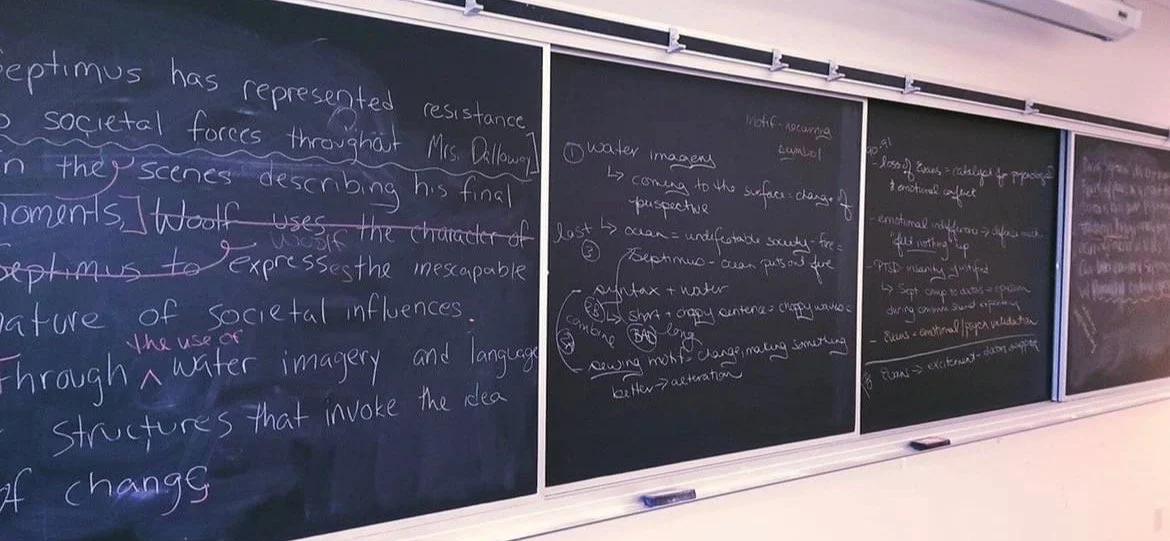
I teach literature and writing as forms of inquiry, interpretation, and discovery. Across my courses, I ask students to move beyond summary into analysis, reflection, and argument, developing the ability to connect textual detail to larger historical, cultural, and human questions. My teaching emphasizes close reading, discussion, collaboration, and writing as a mode of discovery, inviting students not only to build strong analytical arguments but also to consider how stories, language, and representation shape experience, identity, power, and care. Whether students are working with literary texts, cultural materials, or interdisciplinary questions, I want them to leave my classroom as more perceptive readers, more thoughtful writers, and more intellectually curious people.
Select Courses
Writing 1
In Writing 1, students develop the foundations of college-level writing through close reading, discussion, research, metacognitive reflection, and revision. The course asks students to move from observation to argument, helping them to craft strong theses, develop analytical through lines, evaluate and integrate research, and connect textual and visual details to broader cultural questions.
British Literature
Surveying major works of British literature, this course invites students to read a smaller number of texts with real depth. Moving across literary periods, we explore how writers respond to questions of gender, race, class, sexuality, and mental health, and how literary form itself becomes a way of engaging cultural change. Students develop their own critical voice through close reading, discussion, analytical writing, and a final creative Adaptation project.
Literature of Terror
Focusing on atmosphere, uncertainty, psychological tension, and the uncanny, this course examines how literature produces fear not only through shock or violence, but through what it withholds and suggests. Students read texts that ask what a culture fears most and how those fears take shape in narrative, while developing both critical and creative responses to terror as a literary mode. A signature final project invites students to write their own “Tale of Terror” and accompany it with a critical introduction reflecting on the techniques through which their story builds unease and meaning.
Humanities and Healthcare
Bringing together literature, ethics, history, and healthcare studies, this interdisciplinary course introduces students to the cultural and human dimensions of care through close reading, discussion, research, and reflective writing. Students examine topics such as humanism, bioethics, empathy, narrative medicine, burnout, and cultural humility while developing the critical and communication skills needed to think about healthcare not only as a clinical system, but as a deeply human one. Signature assignments ask students to connect course concepts to real-world questions of care, dignity, and responsibility.
Healing, Illness, Stories
At the center of this course is the question of what stories can do in relation to illness, trauma, disability, and care. Reading across genres including fiction, poetry, graphic memoir, essays, and hybrid forms, students consider not only how narrative can support healing, but also how stories can misrepresent, wound, or fail. The course combines close reading and analytical writing with creative and reflective work, culminating in a collaborative bibliotherapy outreach project centered on reading as a form of care.
Medicine in Graphic Narratives
Through the lens of comics and graphic medicine, this course explores how illness, embodiment, care, and mental health can be represented in ways that prose alone cannot. Students learn to read visual form as carefully as language, paying attention to layout, pacing, image-text interplay, and perspective, while considering how graphic narratives shape medical and human experience. For the final project, students create their own original medical or mental health comic and reflect on the formal and ethical choices behind their work.
Victorian Literature
Approaching the nineteenth century through rotating themes, this course opens Victorian literature to different lines of inquiry, including psychology, cultural afterlives, medicine, gender, and social change. Although the focus varies, students consistently engage Victorian texts as rich responses to the intellectual and historical pressures of the period, while building skills in close reading, discussion, and sustained literary analysis.
Senior Seminar
Designed as a capstone experience, my senior seminar asks students to undertake sustained, ambitious literary research by placing major texts in conversation with the cultural and historical forces that shaped them. Students develop substantial research questions, practice advanced close reading, and work with both primary and secondary sources in order to produce original literary arguments. The course brings together literary interpretation, historical inquiry, and scholarly writing in a substantial final essay.