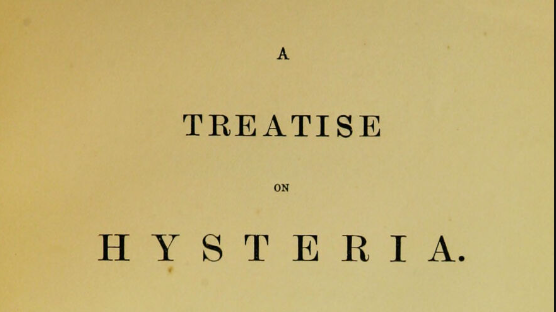
Research Overview
My research examines how narrative (literary, medical, and cultural) has shaped the way we understand women’s health, emotional experience, and illness. I work at the intersection of Victorian studies, the history of psychology, and medical humanities, asking how the stories circulating in doctors’ offices and in novels have defined what it means to be a woman through the lens of diagnosis, and what treatment, recognition, and care have looked like across two centuries. The through-line is a question about language and power: who names the illness, who shapes the cure, and whose experience gets written into the record.
“Early Images of Trauma in George Eliot’s The Lifted Veil”
Humanities (MDPI) | Volume 13, Issue 3 | 2024 | Open Access
This article explores George Eliot’s “The Lifted Veil” (1859) as an early portrayal of traumatic neurosis. Drawing on Pierre Janet’s late-nineteenth-century theories of dissociation, I argue that Eliot presents her narrator Latimer as a figure whose psychological experience anticipates Janet’s model of dissociative trauma rooted in childhood loss. Eliot was writing twenty years before Janet would formally theorize dissociation and the article recovers a striking modernity in Eliot’s psychology.
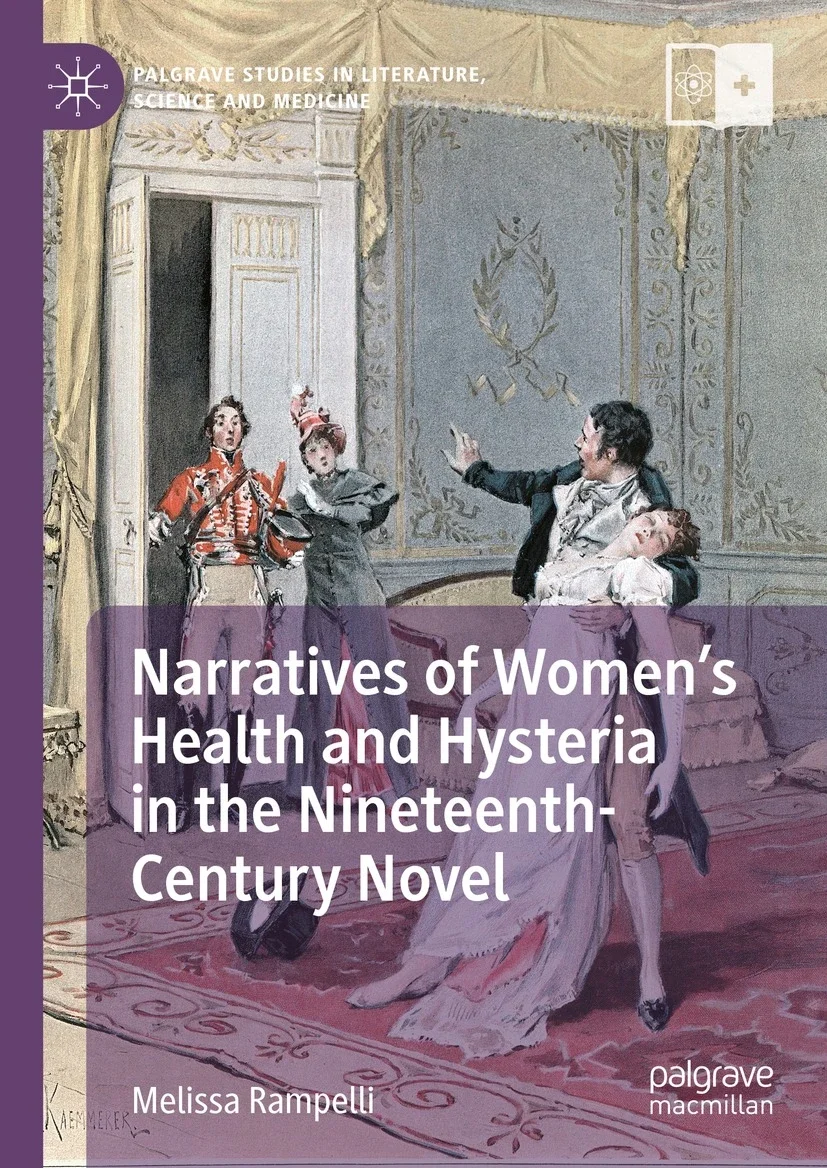
Narratives of Women’s Health and Hysteria in the Nineteenth-Century Novel
Palgrave Macmillan | Palgrave Studies in Literature, Science and Medicine | 2023
What did it mean for a woman to be hysterical in the nineteenth century? And how did that meaning get made?
This book looks extensively at hysteria discourse through medical and sociological texts and examines how this body of work intersects with cultural debates about women’s social, physical, and mental health. Working through Jane Austen’s Sense and Sensibility, Charles Dickens’s Bleak House, George Eliot’s Middlemarch, and Thomas Hardy’s The Woodlanders, the book shows how each author draws on stock literary figures (the sentimental heroine, the detective, the married woman, the New Woman) to enter a live cultural debate about diffused agency, interiority, and the causes and cures of women’s distress.
An epilogue turns to Virginia Woolf’s Mrs. Dalloway, where the shell-shocked war veteran Septimus Warren Smith inherits a hysteria framework built for women with devastating consequences.
“The Hysteric and the HSP”
Journal of Medical Humanities | Volume 44 | 2023
This article places twenty-first-century research on sensory processing sensitivity (SPS)—the psychological trait associated with the “highly sensitive person” (HSP)— alongside mid-nineteenth-century medical discourse on hysteria. I argue that the rhetorical structure through which we understand sensitive emotional experience has shifted in important ways: where hysteria carried a cause-and-cure narrative that pathologized women, contemporary HSP research begins to remove the emphasis on cure in favor of social-emotional learning and cultural revision of stigma around sensitivity. The comparison illuminates what has changed, and what has not, in how society frames women’s emotional depth.